
Industrial Chain Solutions
For over a century, MAXCO Chain has been a trusted industrial roller and engineering class chain manufacturer and solutions provider serving industries worldwide.
All our products are manufactured for reliability, consistency and ease of integration across new installations and replacement projects. This reduces downtime, optimizes chain performance, and enhances lifetime customer value.
We proudly supply a wide array of chain solutions to the following industries:
- Industrial Manufacturing
Lifting, Conveying, Power Transmission, Packaging - Heavy Construction
Excavators, Loaders, Pavers, Trenchers - Mining & Aggregate
Conveyors, Crushers, Bucket Elevators, Stacker/Reclaimers - Automotive Manufacturing
Assembly, Overhead Conveyors, Paint, Storage and Buffer Systems - Agricultural Equipment
Combines, Harvesters, Balers, Spreaders, Conveyors
- Material Handling
Conveyor Systems, Pallet Handling, Lift Tables, Sorting and Distribution - Food & Beverage
Packaging Equipment, Bottling and Filling Lines, Baking, Washing - Forestry & Logging
Log Conveyors, Debarking, Sawmill, Edgers and Trimmers, Sorting, Kiln - Water Treatment
Clarifiers and Sedimentation Tanks, Bar Screens, Chain Drives

Now let’s take a closer look at each of these 9 industries
related to their chain needs and uses:
Industrial Manufacturing
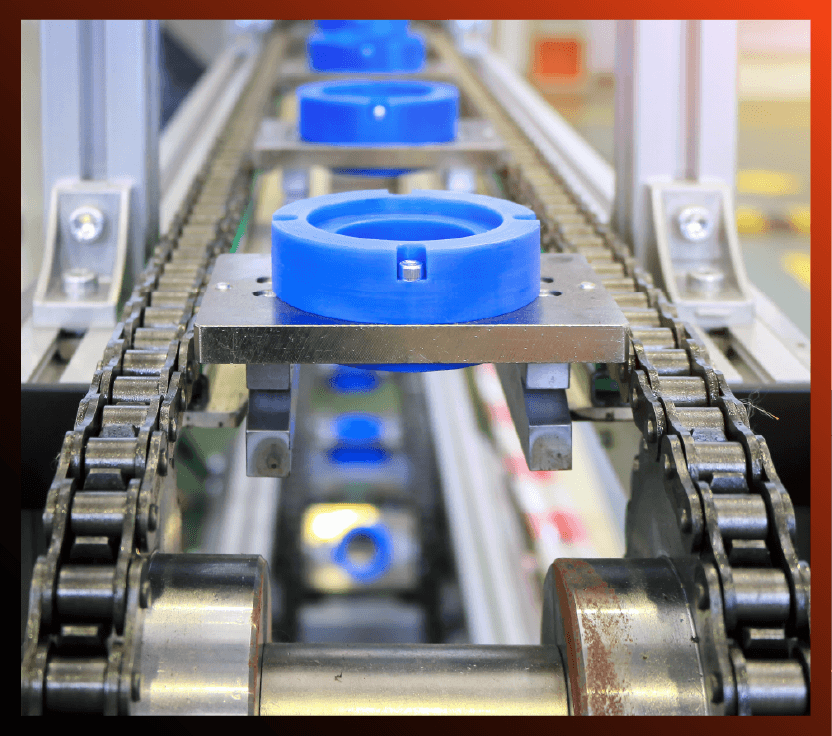
Industrial manufacturing organizations commonly use roller chains and conveyor chains for power transmission and material handling across production lines. These chains are widely used to transfer mechanical power in equipment such as packaging machines, assembly systems, and machine tools, while conveyor chains are designed to move products and materials efficiently through manufacturing processes.
For specialized applications, manufacturers may also use leaf chains for lifting, engineering chains for heavy-duty operations, and stainless-steel chains in corrosive or washdown environments.
Chains must be fatigue and wear resistant and typically connect motors, gearboxes, and shafts, transmitting torque reliably with no slip.
Heavy Duty Construction
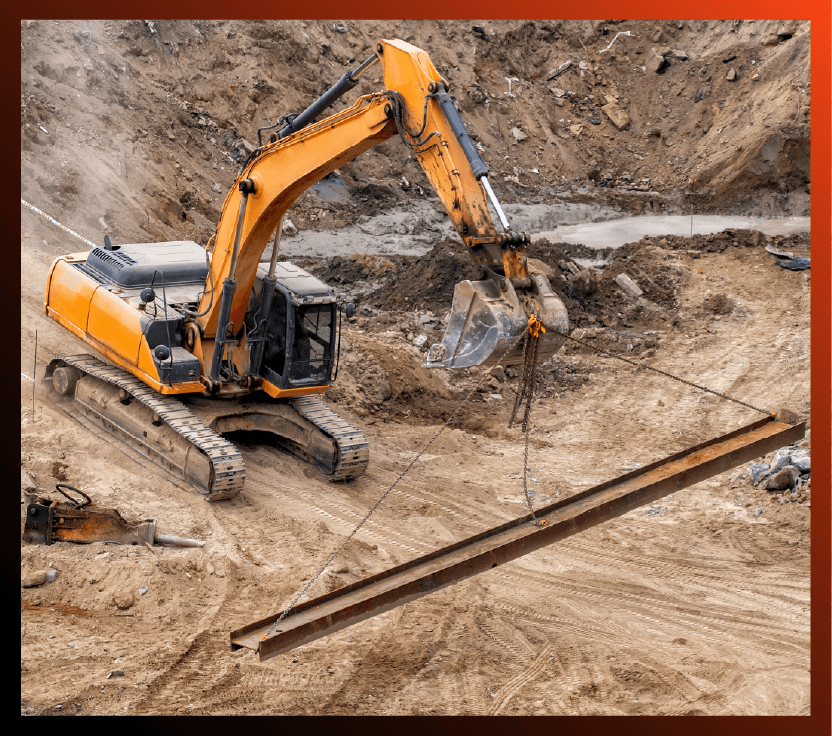
In the heavy construction industry, chains play a critical role in ensuring powerful, reliable, and uninterrupted equipment performance. Chains transmit power and must handle the load within large machines such as excavators, loaders, bulldozers, pavers and road rollers and should be easy to inspect, repair and replace on-site.
Roller chains are widely used in concrete mixers, stone crushers, asphalt plants, batching plants, road rollers, drilling machines, and hoists, delivering efficient power transmission with high strength and durability.
For more demanding applications, engineering chains are the preferred solution in draglines, bucket elevators, apron and scraper conveyors, piling rigs, cement plants, and demolition equipment, where extreme loads, high shock, and harsh environments are common.
Mining & Aggregate
Engineering chains are built for extreme strength and durability, and are the backbone of material conveying applications, such as drag and transfer conveyors, bucket elevators, and apron feeders used in the Mining & Aggregate industry.
Roller chains are also widely used for dependable power transmission in crushers, screening equipment, feeders, and washing systems, delivering efficient torque transfer and consistent performance under heavy loads.
Industrial chains are mission-critical components, often running continuously under load, engineered to perform in the toughest, most abrasive environments.

Automotive Manufacturing
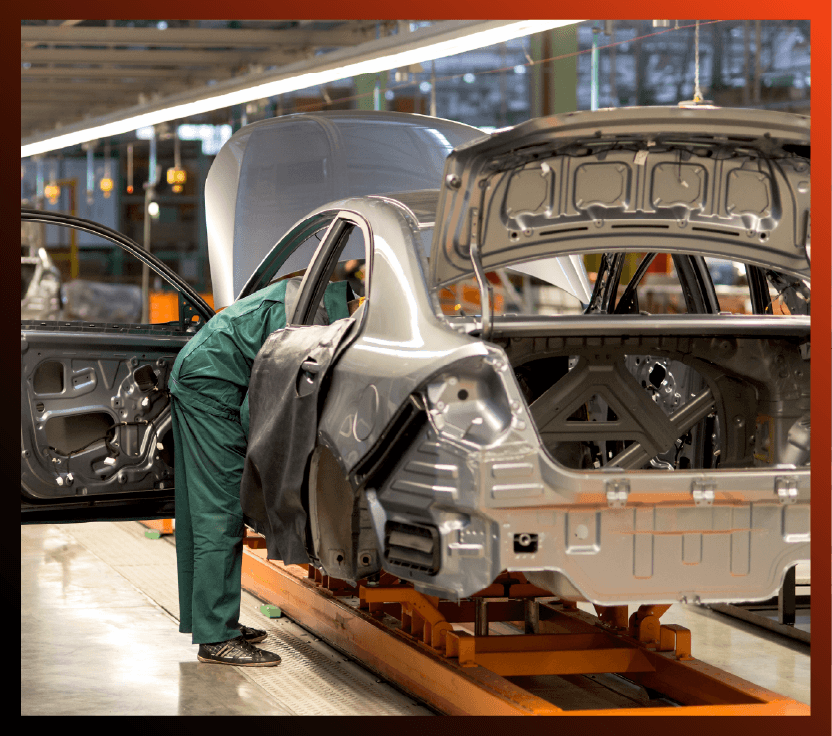
Roller chains are widely used in the automotive industry for efficient power transmission in assembly lines, material handling systems, engine and transmission assembly equipment, robotic systems, paint shop conveyors, sub-assemblies, axels, and parts transfer systems assuring smooth, synchronized operations at high speeds.
Engineering chains built for heavier loads and demanding environments, are commonly used in overhead conveyors, skillet conveyors, slat conveyors, and body shop material handling systems where vehicle frames and large components must be transported safely and accurately.
Agricultural Equipment
Farmers and agricultural processors rely on industrial roller chains for power transmission and conveying for crops and agricultural materials. Chains are durable and more reliable than belts performing in mud, dust, and other inclement weather conditions.
Roller chains are commonly used in a wide range of agricultural equipment, including implements, balers, bale wrappers, spreaders, combines, harvesters, feed conveyors, and feed mixers, where they provide reliable power transmission and efficient conveying in demanding farm and processing environments.


Material Handling & Conveying
Engineering chains are widely used in material handling and conveying systems due to their high strength, durability, and ability to provide positive, non-slip drive. Various types such as bucket elevator, slat, apron conveyor, drag, and overhead conveyor chains are used to transport heavy, bulk, or abrasive materials.
Additionally, they are used for power transmission in conveyor systems, escalators, moving walkways, agricultural machinery, and industrial processing lines where synchronized and reliable movement is required.
Food & Beverage Production
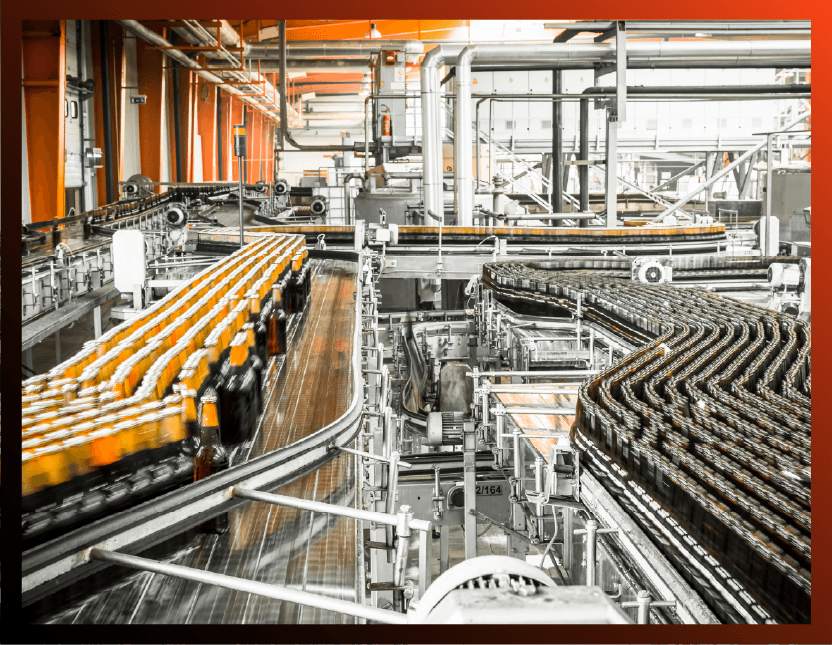
Roller chains are widely used in food and beverage production to drive conveyors, packaging machines, and processing equipment. They provide reliable, continuous motion, moving products efficiently through washing, filling, labeling, and packaging stages while handling heavy loads and high-speed operation.
Chains also power mixers, slicers, palletizers, and lifting systems. Stainless steel and food-grade chains ensure corrosion resistance and hygiene, keeping production lines efficient, reliable, and compliant with food safety standards.
Forestry, Lumber, Pulp & Paper
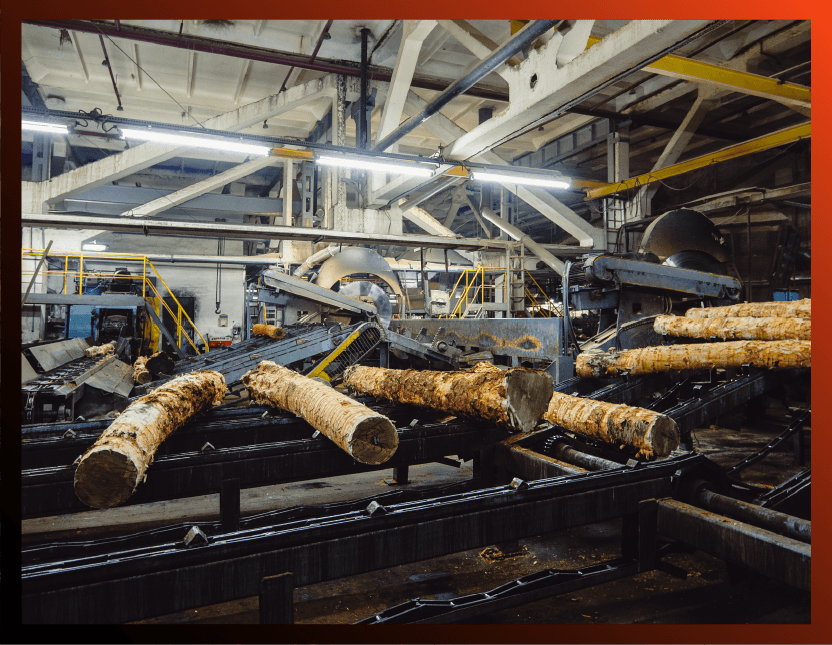
Roller and conveyor chains move logs and boards through sawmills, driving log conveyors, debarkers, saw carriages, edgers, and trimming equipment. They also handle sorting, stacking, and palletizing, providing reliable, high-strength material handling from raw timber to finished lumber.
Chains also power conveyors, feeders, and rollers that transport wood chips, pulp, and paper. They ensure durable, synchronized motion in screening, pressing, drying, and rewinding processes, with stainless steel or corrosion-resistant chains used for wet, abrasive, and high-speed environments.
Wastewater Treatment
Wastewater treatment plants require specialized chain that transmits power and moves equipment through harsh, wet and corrosive environments. These chains must handle high torque at low speeds to move sludge and biosolids between treatment stages, as well as in odor control and auxiliary equipment.
Water treatment plants rely on high-quality mechanical components to ensure efficient sedimentation and sludge removal. Key elements, including industrial chains, sprockets, scraper blades, drive motors, and guide systems, work together to deliver smooth, reliable, and energy-efficient operation.
Designed for durability in wet and corrosive environments, these components enable continuous sludge collection, optimize water clarification, and reduce maintenance downtime.